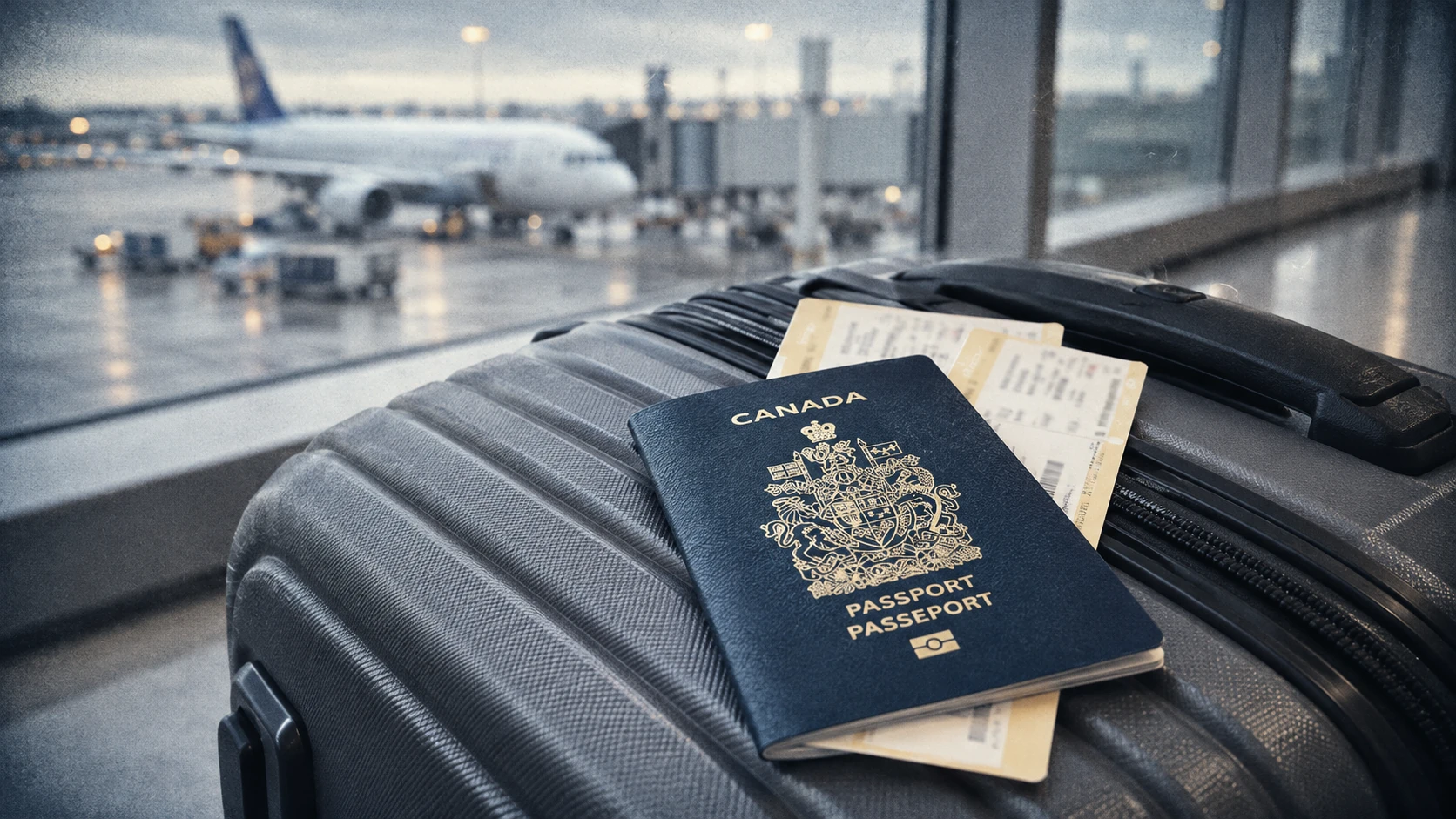
A suitcase can be ready while the journey around it remains unfinished. The missing piece may be an unanswered question about a document, a connection you have not looked at closely, or an arrival address buried in a message. Before adding another item to the bag, give the trip itself a little attention.
This guide proposes a simple order: understand the route, review the documents, consult the relevant official advice, then organise the practical details. It is a preparation method for the reader to adapt. It does not assess anyone’s permission to travel, and the accompanying images illustrate the idea of departure rather than a reported journey.
Start with the journey you actually have
Put the whole itinerary in front of you, including the way home. Read the places and dates in order. Where does each leg begin? Where does it end? Is an overnight stay involved? Which details are confirmed, and which are still an intention? A booking confirmation and a note saying “arrange later” should have different places on the page.
Then look at the spaces between the main bookings: getting to the departure point, finding the next service, reaching the accommodation and leaving again. Write a question beside any part you cannot yet explain. You do not need to solve everything at once. The first useful result is a clear picture of what still needs attention.
When comparing dates and times, keep the calendar date beside each time and identify the local time being used. Read an overnight journey with particular care: what day will you need the room, the onward service or the person meeting you? Ask the provider to clarify an ambiguous confirmation. A neatly arranged itinerary is valuable only if the details within it describe the same plan.
Give documents their own review
Open the documents themselves and compare them with the booking details. Read the name, the expiry date and the type of document you are relying on. The Government of Canada’s pre-boarding identification guidance says the name on identification must match the ticket and boarding pass. Domestic and international travel have different considerations.
For a journey outside Canada, use the official traveller’s checklist to review passport validity against the destination’s requirements. Treat uncertainty as a question to resolve with the appropriate authority or carrier. Do not let a familiar-looking cover, an old trip or a friend’s experience substitute for checking your own documents and route.
Read advice with a question in mind
A long information page is easier to use when you know what you are looking for. Begin with a specific question: which entry documents need checking, what local conditions affect the plan, or where can emergency contact information be found? Note the answer and its source together.
The Government of Canada’s guide to travel advice explains the different sections and the need to stay informed about transit locations as well as destinations. For visa questions, its visa guidance directs travellers to destination information and embassy or consulate confirmation. Save a link to the relevant page so that returning to it before departure is straightforward. A saved note is a useful starting point for another check, not a permanent answer.
Make the first day easy to follow
Imagine looking for information with a bag in one hand. Which details would you want on a single page? Consider the departure point, the booking reference, the accommodation address and the contact details of the people or businesses you have actually arranged to meet. Use the details from your own confirmations.
Keep a readable copy available in the way that suits you: a printed sheet, an offline note or both. Add instructions you have confirmed, rather than assumptions about where someone will be waiting. If your plan depends on a transfer or a particular arrival arrangement, contact that provider beforehand. The aim is a useful handover between home and the next place, with fewer details left to reconstruct.
Separate confirmed details from open questions
A short list with two headings can help: “Confirmed” and “To check”. Move an item only when you have the answer you need. This keeps the preparation honest without turning it into a score. Buying a ticket, reading a page and confirming a requirement are different actions.
For international travel, include a review of your insurance arrangements. The government’s travel-insurance guidance recommends checking policy terms, exclusions and requirements before leaving Canada. Ask the insurer about anything unclear and keep the answer with your policy details. Apply the same habit to other arrangements: record who answered, what was confirmed and which part of the journey the answer covers.
If you are travelling with someone else, agree who will check each shared arrangement and where the answer will be kept. One person can review the accommodation message while another confirms the departure details, but everyone should be able to find the finished plan. Shared preparation works best when responsibility is explicit and nobody has to guess whether “we should check that” became an actual task.
Finish with a small departure sheet
Your final sheet does not need to contain every research note. Keep the essentials together: the route, accessible confirmation details, important contacts and the questions that remain unresolved. Store any sensitive document copies securely. An everyday travel note does not need a full set of personal identification details.
Before leaving, review the sheet against the current confirmations and relevant official pages. Remove anything you have superseded so that two competing versions are not waiting for you later. Then pack the sheet where you intend to use it. Preparation has done its job when the information is understandable, the open questions are visible and the next step is clear.
A few useful questions.
Is this a travel eligibility check?
No. This is an editorial preparation guide. Confirm the requirements that apply to you with the relevant official authority and your carrier.
Should I review a connection as well as my destination?
Yes. The official advice guide includes transit locations in the places travellers should review.
What should I do with an unanswered question?
Keep it clearly marked and identify who can answer it. A checklist is more useful when it shows what still needs attention.
THE ORIGINAL INFORMATION
Keep the source close.
Official resources reviewed 12 October 2026. Open the responsible source for its current conditions and full instructions.